


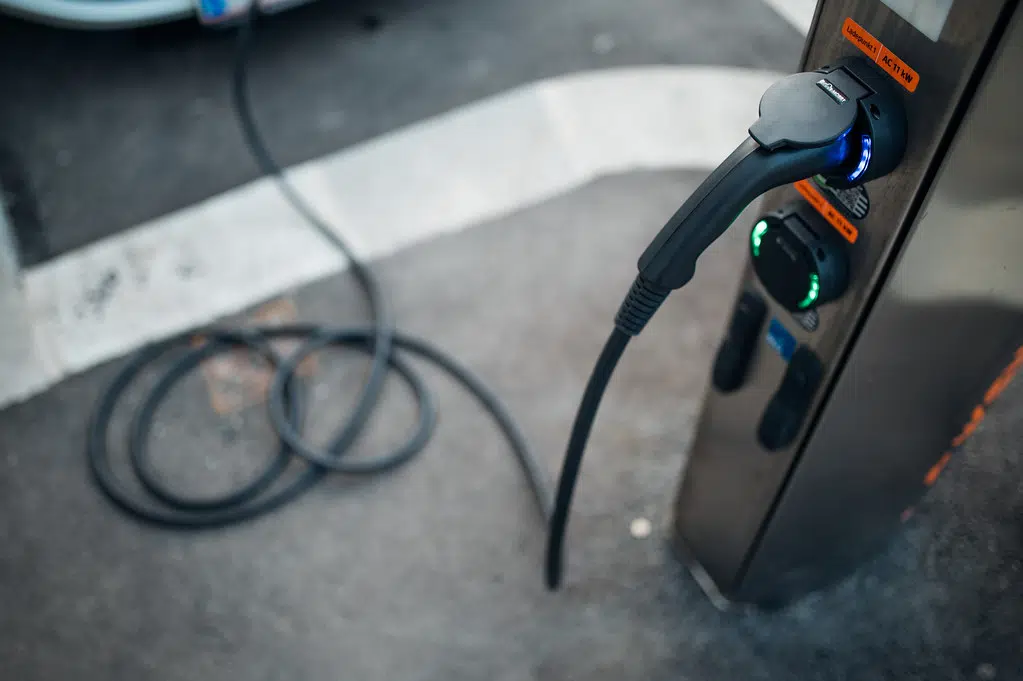
West Grey council is approving a six-month pilot project to measure costs related to some new electric vehicle charging stations.
During a meeting on Oct. 4, a report was brought forward by CAO Laura Johnston. It recommended council direct staff to move ahead with a pilot to gather data for recommendations regarding charging station user fees.
The report says the municipality has been looking to set up eight electric vehicle charging stations around West Grey, and this pilot would launch following the completed installations.
The report says as electric vehicle sales are set to accelerate rapidly over the next 10 years, it is predicted the amount of electric vehicles will increase and there is a growing demand for chargers.
“Further to this, expanding the network of publicly accessible charging stations through rural areas, the municipality is assisting in reducing ‘range anxiety,’ – the fear of running out of charge while on the road either when completing multiple trips or when travelling out of town,” says the report.
The level two chargers the municipality is looking to install are capable of charging batteries in about five hours to travel for 200 kilometres.
Each electric vehicle station comes with two charging heads.
The municipality is looking to install one station at Riverside Park in Durham, West Grey Administration Office in Durham, Ayton Centennial Hall, and the West Grey library in Neustadt.
Questions and concerns were raised by councillors with the placement of these charges, especially with the location in Neustadt where there is already limited parking
Environment and Capital Projects Officer Sarah Hanson says these locations on municipal land were chosen based on a series of qualifications.
“These specific locations were identified based on tourism potential, traffic rates and ease of access. Currently at the present time, the electrical installs are all well underway if not complete in many of these locations. The anticipated installation of the charger units themselves, are within the first two weeks of October. I would like to add that moving the charging locations could potentially jeopardize funding,” says Hanson.
The report says staff are currently not recommending any fees and charges.
Following the six-month pilot, staff would return with recommendations with information including data on location usage, average charge time, recommendations for user-fees based on similar industry practices, parking by-law amendments, and the enforcement to maintain reasonable turnover.
The report says providing electric vehicle chargers at no cost is intended to encourage early EV uptake in the community. Additionally, this will allow the municipality to service more drivers and support greater adoption of EVs by employees and the community.
Staff anticipate the operating costs from electricity, ongoing maintenance, and programming for the charging stations will be minimal and will be absorbed in the annual operating budget during the pilot.
Following the completion of the pilot, and when fees and charges are approved by council, revenues will be managed and collected by the charger provider and released to the municipality from the charger provider.
Hanson says the pilot costs are already being covered through a yearly fee of $150 per charger, which has already been paid for. The only costs the municipality will face, will be the hydro and the yearly management fees.