



A fish tank sounds relaxing until you picture cleaning it after a ten-hour workday. Between your commute and everything waiting at home, you barely have enough time to unwind.
The trick to keeping an aquarium with a busy work schedule is creating a routine you can follow on an ordinary Tuesday. With the right setup and a little planning, aquarium care fits into everyday life without cutting corners on your fish’s needs.
Pick a Tank That Fits Your Routine
Start by being realistic about how much attention your aquarium needs. A tiny desktop tank seems convenient, but small water volumes change chemistry faster. That gives beginners less room for error when something goes wrong.
A moderately sized freshwater aquarium generally offers a more manageable starting point than an elaborate reef setup. Before buying, decide where the tank will sit. Choose a sturdy stand with nearby access to electricity. Avoid direct sunlight, as it encourages unwanted algae growth and adds maintenance.
Give the Tank Time Before Adding Fish
A tempting shortcut when you bring home an aquarium is to skip the waiting. Fill it with water, switch on the filter, and introduce the fish. Unfortunately, a new tank lacks the established beneficial bacteria needed to process fish waste.
Those bacteria convert toxic ammonia to nitrite, and other bacteria then convert the nitrite to nitrate. Building a functioning biological filter takes time, so plan for a fishless cycle before introducing livestock.
Use an appropriate cycling method and monitor the water throughout the process. Wait until the biological filter consistently processes ammonia and nitrite before gradually adding fish.
Resist the Urge To Overcrowd Your Aquarium
A crowded aquarium demands more attention because additional fish produce more waste. The temptation makes sense. You visit an aquarium shop and spot another beautiful species that would look perfect in your tank.
Before purchasing anything, research its adult size. A fish that looks tiny in the store won’t necessarily stay that way. If your schedule leaves little time for troubleshooting, keeping a manageable number of compatible fish will make the experience easier.
Make Feeding a Short Daily Habit
Feeding shouldn’t require a complicated routine. What matters is offering the right food in the right amounts. Overfeeding can cause uneaten food to break down in the aquarium and worsen water quality.
Follow feeding guidance for your particular species and observe how your fish respond. Don’t add extra food just because they rush toward the glass when you approach. If other household members help with feeding, establish who’s responsible each day. Your fish don’t need two dinners because everyone assumed nobody fed them!
Choose Equipment You Can Maintain
Reliable equipment makes a huge difference when you’re away from home most of the day. Your filter deserves special attention here, because it supports water circulation and biological filtration.
Finding the correct filter size for your aquarium starts with knowing the tank’s capacity. From there, consider how much waste your fish produce and whether the water flow suits them.
A stronger current isn’t always better. Some fish prefer gentler movement, so choose a filter that supports the aquarium without forcing its inhabitants to fight the current. Straightforward maintenance saves time when your schedule gets crowded.
Protect Your Beneficial Bacteria
When you clean your filter, gently rinse reusable biological media in water you’ve removed from the aquarium. Avoid untreated tap water because chlorine or chloramine harms beneficial bacteria. You should also avoid replacing all your biological media at once. Preserving those bacterial colonies helps the filtration system continue processing waste.
Test the Water Before Problems Become Visible
Clear water doesn’t automatically mean your aquarium has safe water conditions.
Ammonia and nitrite levels sometimes rise without changing how the tank looks. That’s why regular testing matters even when everything appears normal. Keep a reliable testing kit at home and check your established freshwater aquarium at least once a week.
New tanks need more frequent monitoring while the biological filter develops. Ammonia and nitrite should remain at zero. Track nitrate based on your fish’s needs.
Give Water Changes a Regular Place on Your Calendar
Water changes become easier when you treat them like a recurring appointment instead of waiting until the tank looks dirty. Many freshwater aquariums benefit from weekly partial water changes of about 25%. Your aquarium’s specific needs and water test results should guide how much you remove.
Use a siphon to remove debris while draining water. Before refilling, treat replacement tap water with an appropriate conditioner and match the aquarium’s temperature.
Keep your maintenance routine simple:
- Review your latest water test results.
- Remove debris from the substrate.
- Replace the planned amount of water.
- Check the filter for reduced flow.
- Observe your fish for unusual behavior.
Once you get comfortable with the process, setting aside a regular maintenance window will become easier.
Let Automation Handle the Repetitive Work
You don’t need an expensive collection of gadgets to simplify aquarium care. A basic lighting timer offers a useful starting point. It keeps a consistent schedule without making you remember the lights every morning.
For tropical fish, a reliable aquarium heater with a thermostat supports stable temperatures. Check the thermometer regularly to confirm the equipment works correctly. Remember, automation just supports your routine! You still need to watch your fish and check the equipment for problems.
Prepare for Your Busiest Workweeks
Sometimes your schedule changes without warning. An evening shift runs late, or an unexpected business trip takes you away from home. If you’ll be away, arrange for someone reliable to check the aquarium. Explain the feeding routine and show them how to recognize problems with the equipment.
For short absences, research feeding arrangements that suit your fish rather than assuming they need extra food in advance. Premeasuring portions also helps prevent accidental overfeeding when someone else handles care.
Most importantly, keep your usual maintenance schedule whenever possible. A predictable routine helps you notice changes before they become serious problems.
The key to keeping an aquarium with a busy work schedule is enjoying the hobby without constantly worrying about the next maintenance task. Choose a setup that suits your lifestyle and give your fish the consistent care they need. And after a long day at work, you’ll get to enjoy the peaceful aquarium you wanted in the first place!
Image Credentials: M-Production, #256194796
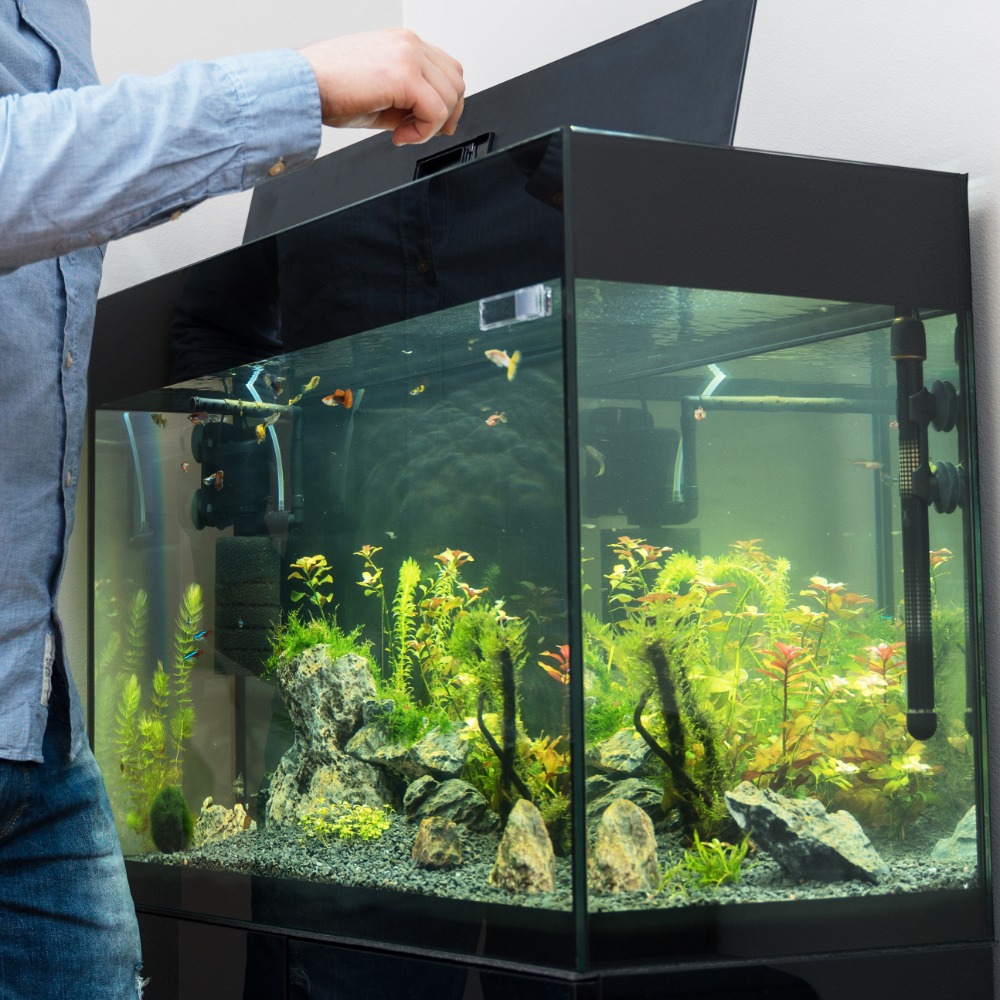
A man in a light blue button-up shirt sprinkling food into a glass aquarium filled with small fish and aquatic plants.

Comments